
Seperu folkdance and associated practices
⚠️ This element is on the Urgent Safeguarding List — immediate measures are needed to ensure its survival.
Practised In
Overview
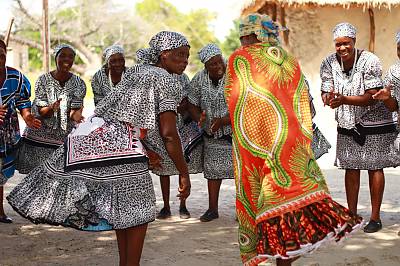
The Seperu folkdance and associated practices involve singing, dancing and sacred rituals that are highly significant in the lives of Veekuhane community members. Seperu is a celebratory practice performed during ceremonies that mark important milestones in the community members’ lives. In the dance the women form a horseshoe, while male dancers face the women at the end of this horseshoe. The lead dancer uses a flywhisk to direct and choose the female dancer, while other members of the group imitate the sounds of a male dove. The selected female dancer then shows her dancing skills by reflecting the image of a peacock tail with her multi-layered dress (‘mushishi’). Although the Seperu folkdance is a key symbol of identity and pride for the Veehukane, its knowledge bearers and active practitioners have diminished in number, affecting its visibility and transmission to the younger generations. Currently, there are only 194 active practitioners, with twelve master practitioners, all of whom are over seventy years old. Traditional methods of transmission have been undermined by the distortion of the significance of the ‘mushishi’ garment, modern wedding ceremonies, current curricula in schools, and modernization, which has led community members to move to other districts of the country.
Domains
Details
- Country
- Botswana
- Inscribed
- 2019
- Register
- Urgent Safeguarding List
- Reference
- 1502