


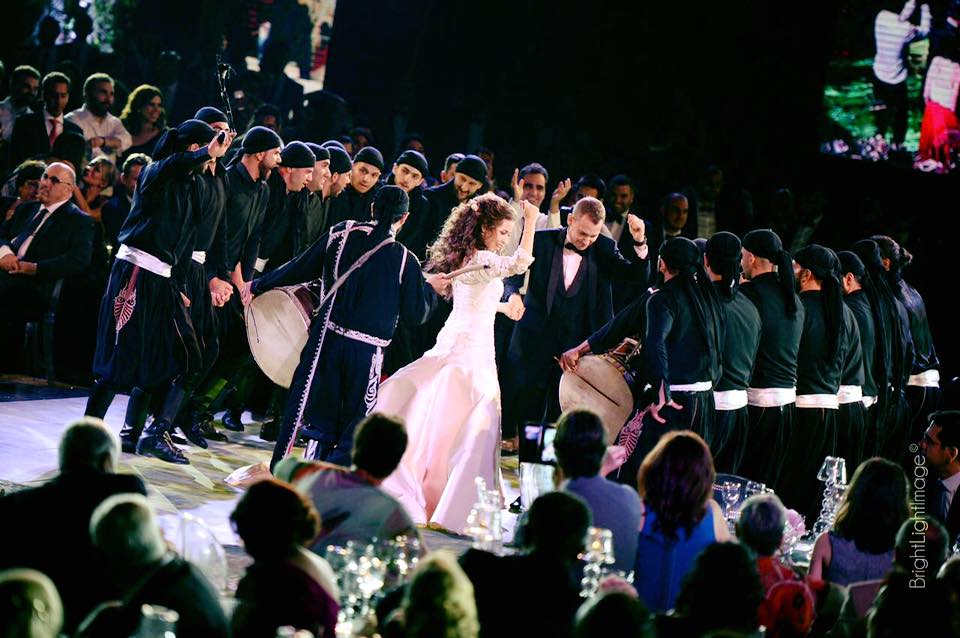

Dabkeh, traditional dance in Palestine
Practised In
Overview
Dabkeh is a popular group dance in Palestine that is accompanied by traditional wind instruments and popular singing. A social activity, it is performed in several regions during festivals, celebrations and events such as weddings and graduations. Dabkeh is performed by eleven dancers, regardless of gender. The dancers stand in a straight line or semicircle, clasping hands and shoulders to indicate cohesion. The movements involve jumping and hitting the ground with their feet. The dance can be performed by professional groups or spontaneously in public squares and family yards. Most Palestinians know the dabkeh dance and practise it as a means of sharing their joy with family, friends and neighbours. The lyrics of the accompanying folk songs are in local dialects and express emotions related to the occasion, such as courage, strength, and love. Dabkeh and the accompanying arts and crafts are transmitted informally, through one-on-one learning and training. Youth learn by participating in social celebrations where dabkeh is performed and by imitating adults. The practice is also transmitted through summer vacation activities, in schools and universities, and through existing audiovisual media and publications. Dabkeh is a means of expressing cultural identity, celebrating family occasions and increasing social ties.
About Dabkeh
Dabke is a Levantine folk dance, particularly popular among Lebanese, Jordanian, Palestinian, and Syrian communities. Dabke combines circle dance and line dancing and is widely performed at weddings and other joyous occasions. The line forms from right to left and the leader of the dabke heads the line, alternating between facing the audience and the other dancers.
Read more on WikipediaDomains
Details
- Country
- Palestine
- Inscribed
- 2023
- Register
- Representative List
- Reference
- 1998