
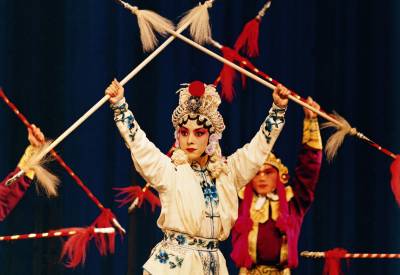


Kun Qu opera
Practised In
Overview
Kun Qu Opera developed under the Ming dynasty (fourteenth to seventeenth centuries) in the city of Kunshan, situated in the region of Suzhou in southeast China. With its roots in popular theatre, the repertory of songs evolved into a major theatrical form. Kun Qu is one of the oldest forms of Chinese opera still performed today. It is characterized by its dynamic structure and melody (kunqiang) and classic pieces such as the Peony Pavilion and the Hall of Longevity. It combines song and recital as well as a complex system of choreographic techniques, acrobatics and symbolic gestures. The opera features a young male lead, a female lead, an old man and various comic roles, all dressed in traditional costumes. Kun Qu songs are accompanied by a bamboo flute, a small drum, wooden clappers, gongs and cymbals, all used to punctuate actions and emotions on stage. Renowned for the virtuosity of its rhythmic patterns (changqiang), Kun Qu opera has had a considerable influence or more recent forms of Chinese opera, such as the Sichuan or Beijing opera. The opera has suffered a gradual decline since the eighteenth century because of the high-level technical knowledge it also requires from its audience. Of the 400 arias regularly sung in opera performances in the mid-twentieth century, only a few dozen continue to be performed. The Kun Qu opera survived through the efforts of dedicated connoisseurs and various supporters who seek to attract the interest of a new generation of performers.
About Kun Qu opera
Kunqu, also known as Kunju (崑劇), K'un-ch'ü, Kun opera or Kunqu opera, is one of the oldest extant forms of Chinese opera. It evolved from a music style local to Kunshan, part of the Wu cultural area, and later came to dominate Chinese theater from the 16th to the 18th centuries. Wei Liangfu refined the musical style of kunqu, and it gained widespread popularity when Liang Chenyu used the style in his drama Huansha ji. Well-known pieces of Kunqu opera included The Peony Pavilion from the Ming dynasty.
Read more on WikipediaDomains
Details
- Country
- China
- Inscribed
- 2008
- Register
- Representative List
- Reference
- 4