


El-Kurru
Component of Gebel Barkal and the Sites of the Napatan Region
Overview
These five archaeological sites, stretching over more than 60 km in the Nile valley, are testimony to the Napatan (900 to 270 BC) and Meroitic (270 BC to 350 AD) cultures, of the second kingdom of Kush. Tombs, with and without pyramids, temples, living complexes and palaces, are to be found on the site. Since Antiquity, the hill of Gebel Barkal has been strongly associated with religious traditions and folklore. The largest temples are still considered by the local people as sacred places.
About El-Kurru
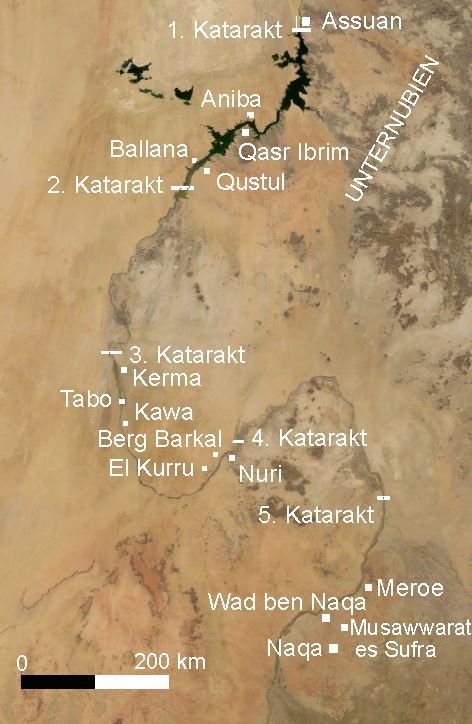
El-Kurru was the first of the three royal cemeteries used by the Kushite royals of Napata, also referred to as Egypt's 25th Dynasty, and is home to some of the royal Nubian Pyramids. It is located between the 3rd and 4th cataracts of the Nile about 1 mile (1.6 km) west of the river in what is now Northern state, Sudan. El-Kurru was first excavated by George Reisner in 1918 and 1919 and after his death his assistant Dows Dunham took over his work and published the excavation report on El-Kurru in 1950. The El Kurru cemetery was primarily used from about 860 BC until 650 BC. The first tomb with a name attached to it is that of King Piye dating to about 750 BC, the sixteen earlier tombs possibly belong to Piye's royal predecessors. The last 25th dynasty king, Tantamani, was buried at El Kurru around 650 BC. The subsequent Napatan rulers chose to be buried at the royal cemetery at Nuri instead. However, in the mid-4th century the 20th king, whose name is unknown, chose to have his tomb, as well as that of his queen, built at El Kurru.
Read more on WikipediaSelection Criteria
(i)(ii)(iii)(iv)
Details
- Countries
- Sudan
- ISO Codes
- SD
- Coordinates
- 18.4100, 31.7714
Stay Nearby
El-Kurru
Attractions & Tickets
El-Kurru
Getting Here
El-Kurru