

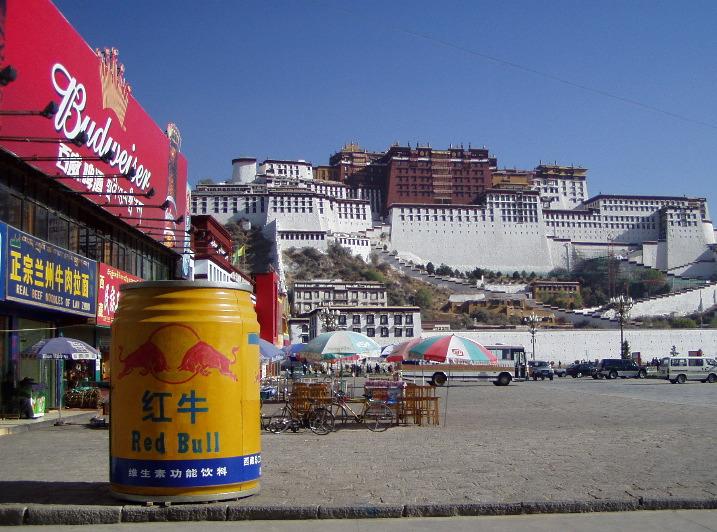


Potala Palace
Component of Historic Ensemble of the Potala Palace, Lhasa
Overview
The Potala Palace, winter palace of the Dalai Lama since the 7th century, symbolizes Tibetan Buddhism and its central role in the traditional administration of Tibet. The complex, comprising the White and Red Palaces with their ancillary buildings, is built on Red Mountain in the centre of Lhasa Valley, at an altitude of 3,700m. Also founded in the 7th century, the Jokhang Temple Monastery is an exceptional Buddhist religious complex. Norbulingka, the Dalai Lama's former summer palace, constructed in the 18th century, is a masterpiece of Tibetan art. The beauty and originality of the architecture of these three sites, their rich ornamentation and harmonious integration in a striking landscape, add to their historic and religious interest.
About Potala Palace
Potala Palace is a museum complex in Lhasa, the capital of the Tibet Autonomous Region of China. It was formerly the winter palace of the Dalai Lamas, built in the dzong style on Marpo Ri. From 1649 until 1959 it served as the Dalai Lamas' residence, after which it became chiefly a museum following the annexation of Tibet by the People's Republic of China.
Read more on WikipediaSelection Criteria
(i)(iv)
Details
- Countries
- China
- ISO Codes
- CN
- Coordinates
- 29.6555, 91.1184
Stay Nearby
Potala Palace
Attractions & Tickets
Potala Palace
Getting Here
Potala Palace